 FindSolar.ca
Put your roof to work.
Rooftop solar turns 25 years of power bills into power you own outright. The panels are commodities; the company that installs them is not. Ten minutes here and you'll know what the job involves, what it should cost, and how to tell a first-rate solar installer from a fast talker. Then compare quotes on your terms.
See solar on your actual roof, before anyone climbs a ladder.
Type your address and Roof Check reads your roof the way a good installer starts: from imagery of your actual house. Roof sections, pitch, compass direction, and the shade that crosses them through the year. The full report is open on the page. No email wall, no account, nothing saved.
Panels drawn to scale
A recommended layout drawn panel by panel on a satellite photo of your own roof, placed on the sections that earn the most sun. One slider resizes the system and the drawing follows.
A score you can compare
Your roof graded out of 100, built from measured peak sun and how many panels physically fit. A quick, fair way to decide whether solar deserves a site visit at your address.
Numbers priced for your province
Production for the year, month by month with Canadian snow in the math, and what that offsets at your province’s planning rate. The rebates and installers that apply where you live sit one click away.
A sun map of your roof
One click paints where the sun actually lands on your roof, strong sections and weak corners alike, from Google’s measured sun data for your address. You see why the layout sits where it does.
Free, no signup. Most Canadian cities and towns are covered; rural addresses get a location estimate instead.
How rooftop solar works, in four stages.
Most Canadian homes can carry solar. What varies is the pitch and shading of your roof, the capacity of your electrical panel, and how your province credits the power you send back to the grid. A good installer settles all of it before quoting a number. Here's the sequence, so none of it surprises you.
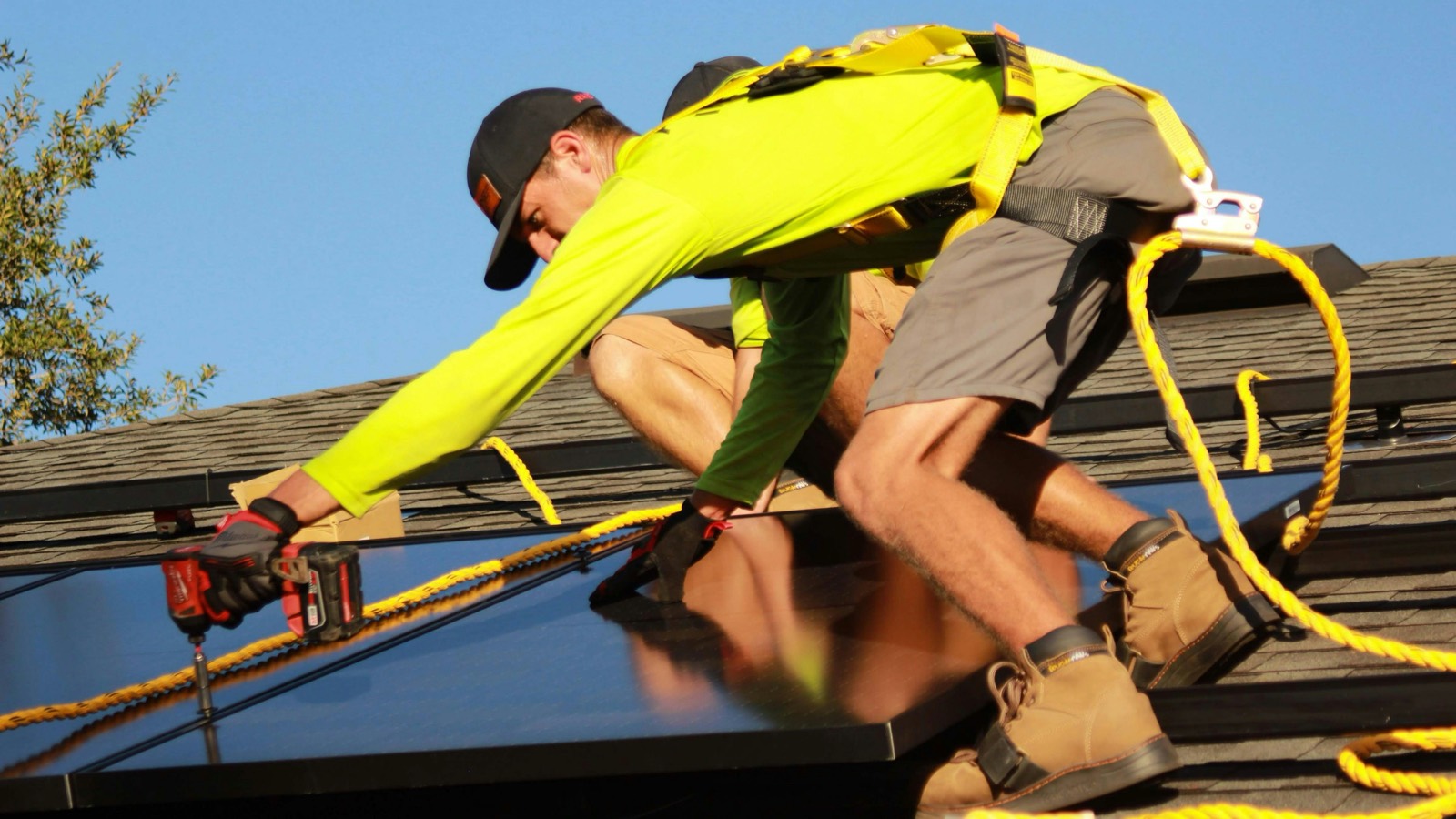
Someone gets on your roof
A real quote starts with a person on your roof: measuring usable area, checking pitch, tracing how shade moves through the day, and confirming that your electrical panel, the breaker box in your basement or garage, has room for the system. Anyone pricing your home from satellite photos alone is guessing, and the guess tends to get corrected later, in their favour.
Your system gets designed and permitted
The layout, the system size and the inverter, the box that turns what your panels produce into power your house can use, are designed around your actual usage rather than a package tier. Your installer then files the electrical permit and the utility connection application on your behalf. Both take time, neither is optional, and a company that treats the paperwork as your problem is showing you how the rest of the job will go.
Install day
Quicker than most people expect. Mounting rails are bolted into the structure of your roof and sealed watertight, panels are fastened to the rails, and a licensed electrician makes the final connection into your breaker panel. On most homes the roof work takes one to three days.
Inspection, then switch-on
Panels on the roof produce nothing until two outsiders say so. An electrical inspector signs off on the work, then your utility swaps or reprograms your meter so it can credit the power you send back. Expect a few weeks between install day and switch-on. The gap is normal; the good companies warn you about it up front.
What a proper solar installation covers.
A solar installation is really three trades arriving as one crew: roofing, electrical work, and the utility paperwork that makes it all legal. Each one leaves something on your home that stays there for 25 years. Here's what each part looks like when it's done properly.
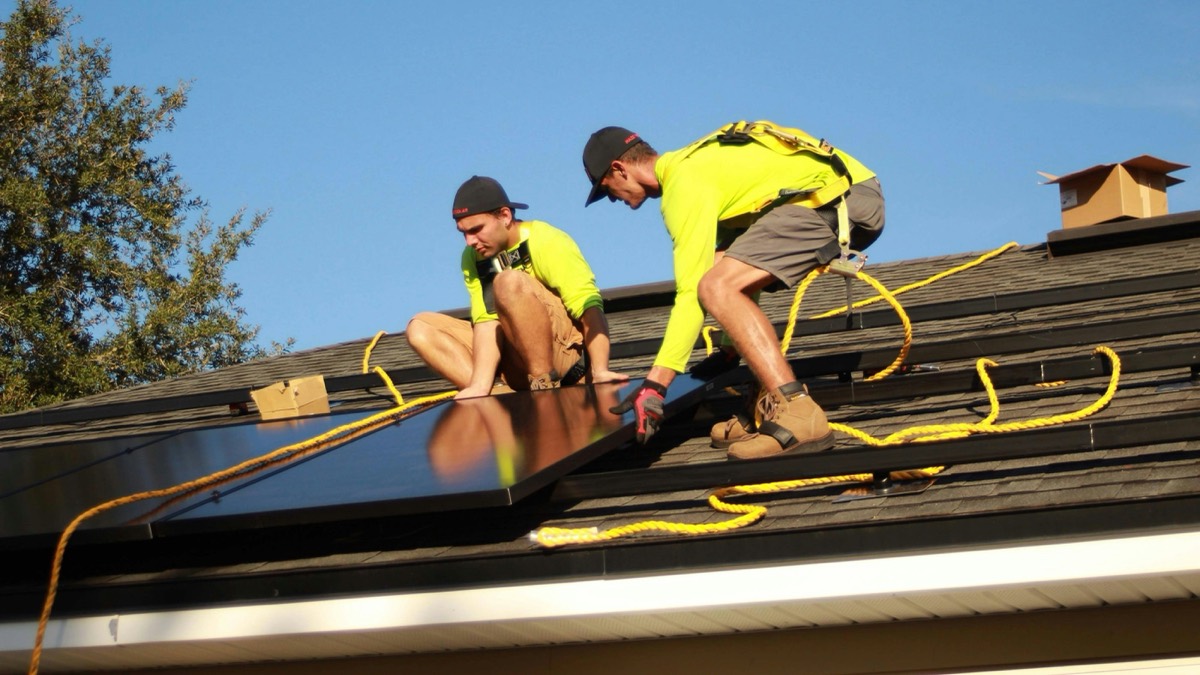
Roof & mounting
The rails should be bolted into the structural framing of your roof, not just the thin decking under the shingles, and every attachment point sealed with metal flashing so water never finds it. The whole array is engineered for your local snow and wind loads. In most of Canada, snow is the number that matters.
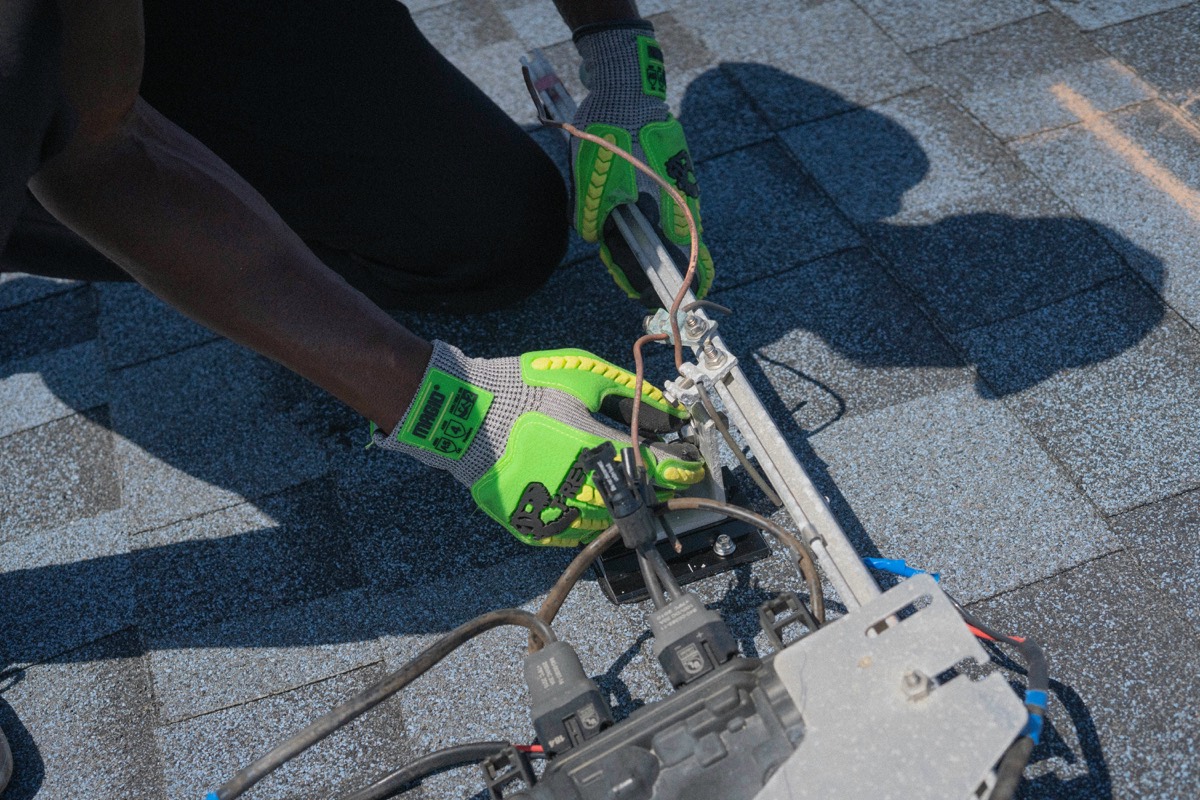
Electrical & inverters
Every system includes an inverter, the hardware that converts what your panels generate into household power, wired into your breaker panel by a licensed electrician. If your panel is already near capacity, the upgrade belongs in the quote from day one, not on a surprise invoice halfway through install day.
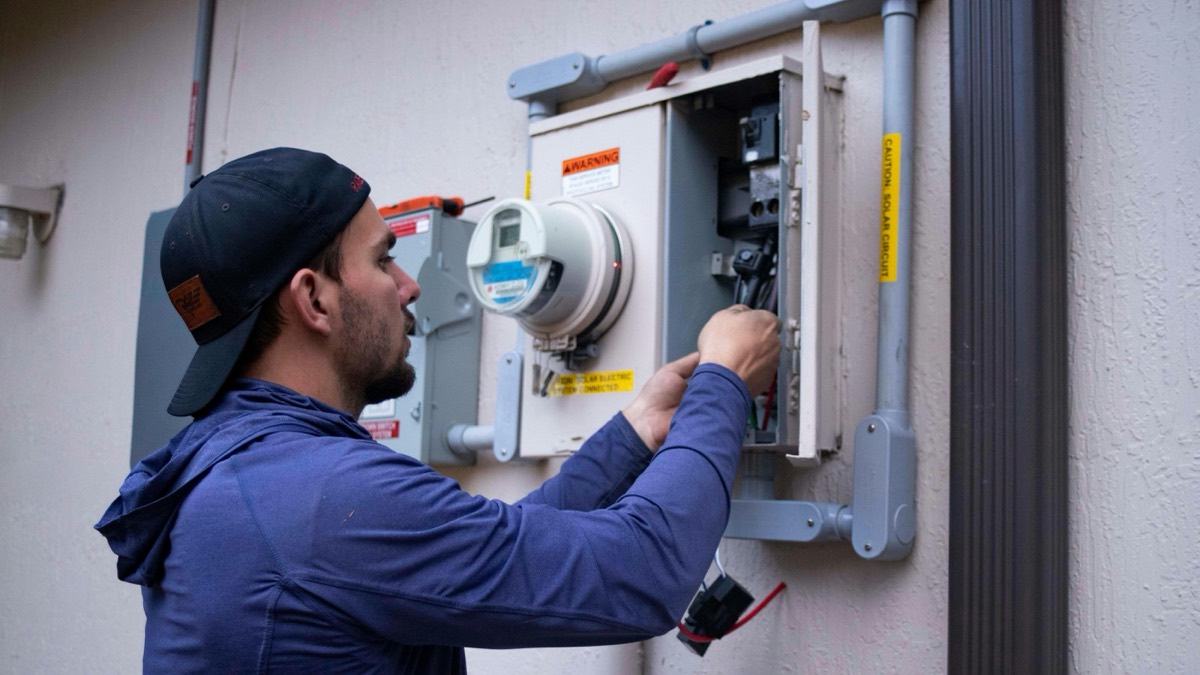
Meter hookup & inspection
The permit gets closed, an independent inspector passes the work, and your utility switches your meter so it can count power flowing in both directions. Your installer should handle every form and give you one date: the day your system legally starts producing.
Choosing the right solar installer for your home.
The panels are the most standardized part of the job: any reputable manufacturer's product will outlive your mortgage. The real variable is the company that mounts them, and that industry contains both craftsmen and cowboys. You don't need to learn the trade to tell them apart. You need four questions, asked before anything is signed.
Who is actually on your roof
A polished sales rep tells you nothing about the crew. Plenty of companies sell the job, then hand the work to whichever subcontractor is available that month. The name on your contract and the people on your shingles can be two different businesses.
Ask thisIs the installation crew in-house or subcontracted, and who honours the workmanship warranty in five years?
Licensing, permits and inspection
In every province, the final connection must be made by a licensed electrician, under an electrical permit, with an inspection passed before your utility allows switch-on. None of it is optional, and none of it is your job to arrange. A company that hesitates on the details has just told you something.
Ask thisWho pulls the electrical permit, and what's the permit number once it's filed?
Three warranties, not one
"Fully warrantied" usually refers to the panel and inverter warranties, which come from the manufacturers and cost your installer nothing. The one to scrutinize is the installer's own workmanship warranty: it covers the holes they made in your roof, and it runs from one year to twenty-five depending on the company.
Ask thisHow long is your workmanship warranty, and can I have it in writing?
How much roof you have left
Panels are built to sit in place for about 25 years. Asphalt shingles last 15 to 25. If yours has under ten years left, reroof first: paying a crew to lift off a full array and reinstall it later is a bill good timing avoids entirely.
Ask thisGiven my roof's age, should it be replaced before the array goes on?
Get every quote in dollars per watt.
It's the industry's own yardstick, and the only number that puts a 7 kW quote and a 10 kW quote on the same scale. Divide the total price by the system size in watts: a 9 kW system at $29,000 is $3.22 per watt. Installers use this figure to compare each other; you should use it to compare them.
Estimate your solar savings before anyone knocks.
Three questions you can answer from your kitchen table. Results update as you type. No email required.
Estimates only, and deliberately conservative. Net position is avoided power spend across 25 years minus the mid-point install cost, before any rebate, financing cost or utility export credit. Provincial rate and production figures are planning averages, not your utility's tariff. Every home needs an on-site evaluation before anyone can quote real numbers.
Ready to compare solar quotes for your roof?
Reading gets you most of the way. Real numbers finish the job. Tell us about your home once, and we pass your request to indexed installers who cover your postal code. The quotes come to you, you compare them on your own schedule, and nobody needs a seat in your living room to get you a price.
- Free for homeowners, always
- No obligation to accept any quote
- We're not an installer, so we have no quote of our own to defend
Start your quote request
Two minutes, five fields, free for homeowners. The form is one scroll away.
Go to the form ↓Real data. Real installers. No lead resellers.
Most quote sites are marketing companies that auction your details to whoever pays the most per lead. We work in the opposite direction: we read Canadian installer websites ourselves, indexed the whole market, and match you from that research. Nobody in the directory paid to be there.
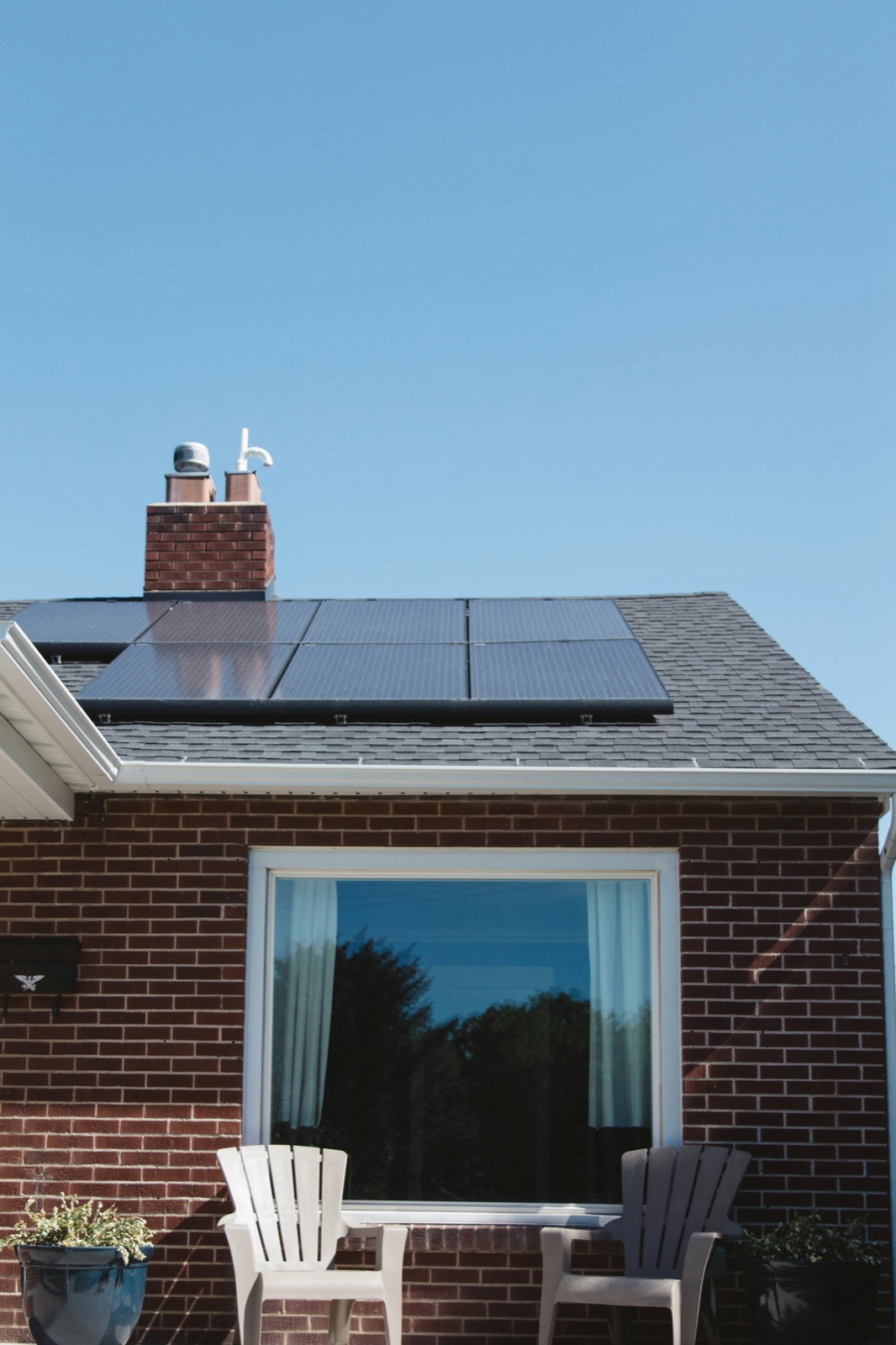
We work for homeowners, not installers.
FindSolar.ca began as a research project with a simple brief: index every residential solar installer in the country and read what they actually publish. That work became this site. 1,165 installers indexed across 12 provinces and territories, 716 of their websites reviewed in depth, and a growing library of plain-language guides built from what we found.
Our independence is the product. Installers cannot pay to be indexed, reviewed or recommended. When you request quotes, the companies that respond pay us a flat referral fee only after your quotes are delivered, the same amount whoever they are, so we have no favourite to push and your price never moves because of us.
Where Canada's solar installers actually are.
Solar is a local trade. The company doing beautiful work in Calgary cannot help you in Halifax, so the question that matters is how much choice you have near your own postal code. These counts come from our ongoing review of Canadian installer websites, and they move as the market does.
Free solar calculators: do the math yourself.
Free, open, and no email wall in front of any of them. Run your own numbers early, so the first estimate you hear from a salesperson is never the first one you've seen.
Cost Calculator
What a fair price looks like in your province, in dollars per watt, before anyone quotes you.
Open tool →Financing Calculator
Cash, loan or lease, compared on total cost, including the fees the brochure leaves out.
Open tool →Home solar in Canada, explained without the pitch.
Built from the same research as the directory, for people who would rather read for ten minutes than sit through a pitch.
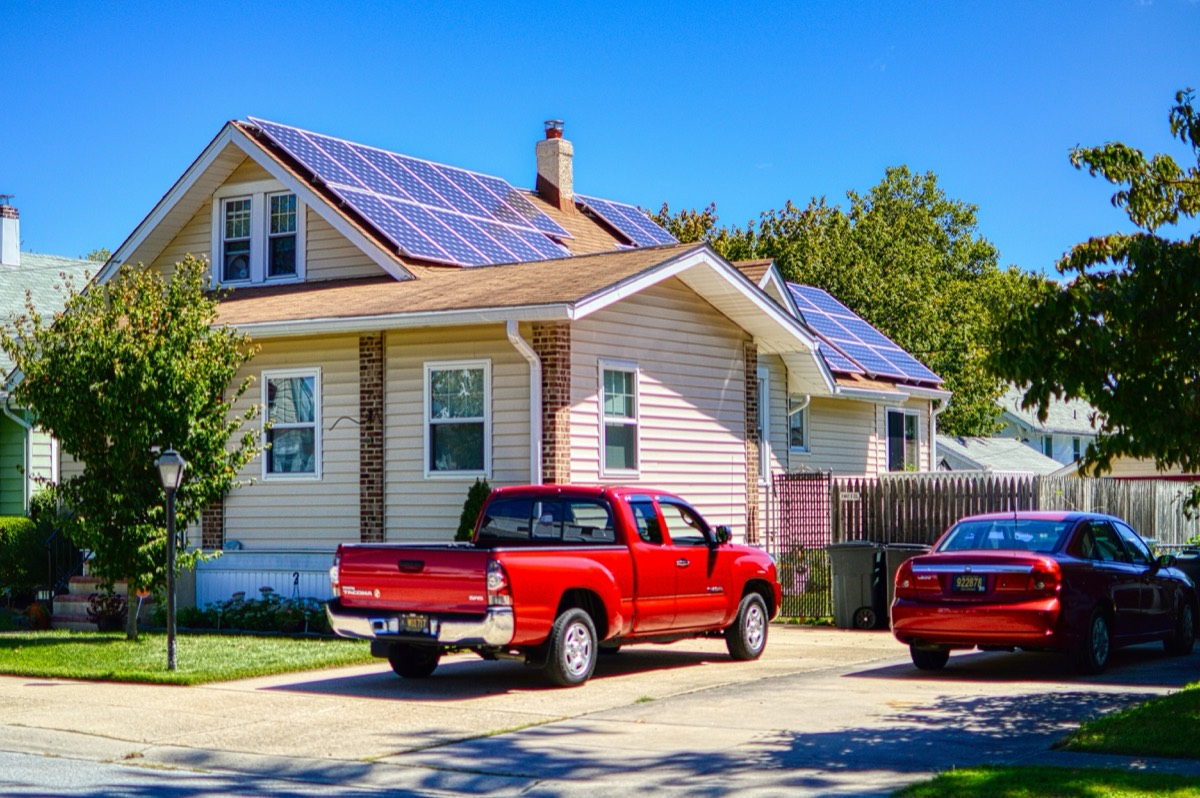
The Greener Homes Loan Is Closed. Here's What's Actually Available (2026)
The federal loan everyone still mentions is closed to new applicants. Here's what provinces, utilities and municipalities offer instead, and how to stack what's left.
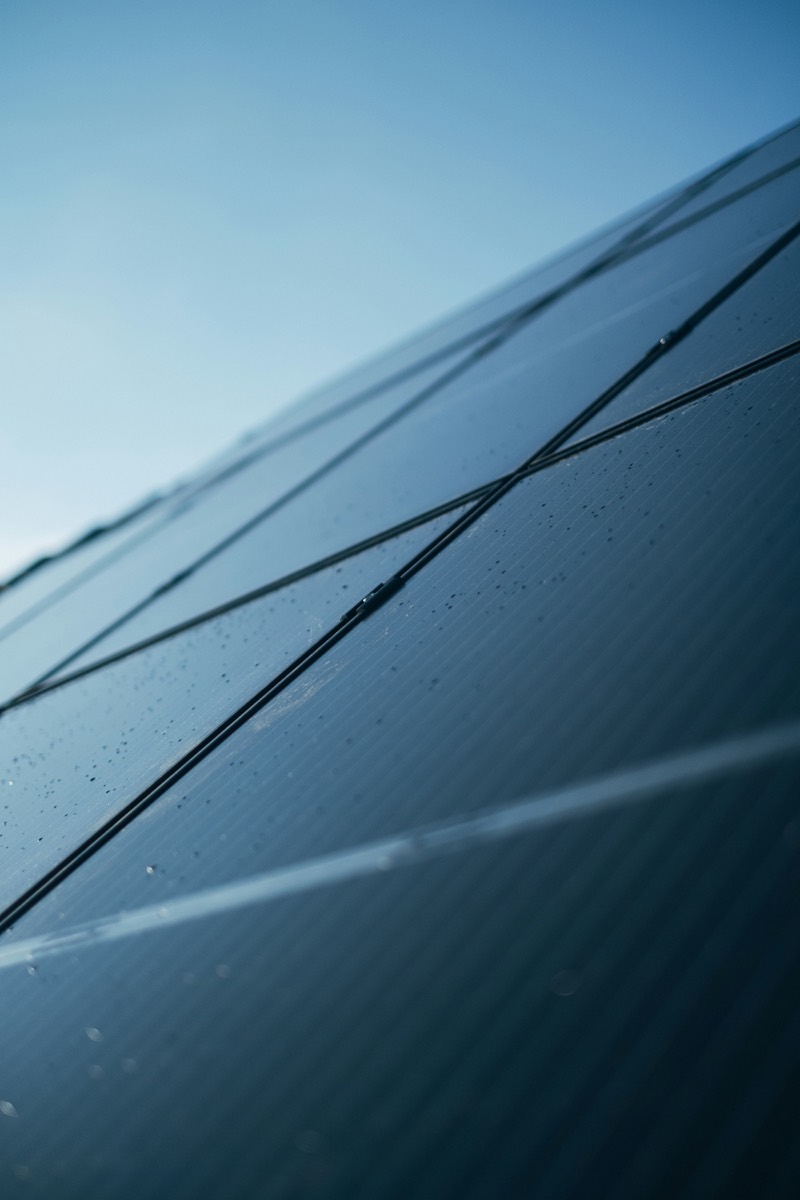
Do Solar Panels Survive Alberta Hail?
What panel hail ratings actually cover, what the 2024 Calgary storm did to real rooftops, and how home insurance treats an array.
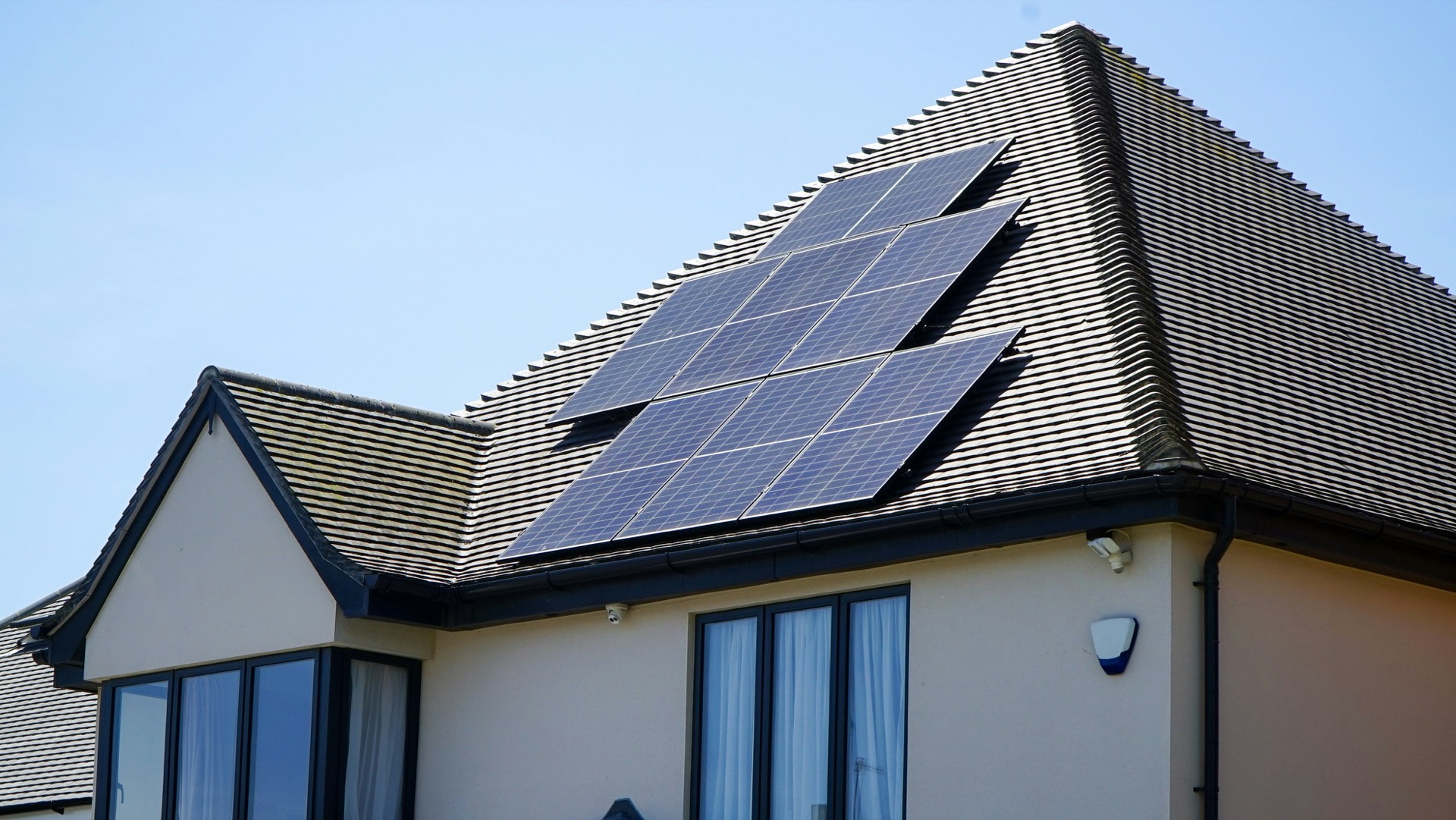
Solar Club Alberta Explained: 35¢ Summer Rates
Alberta lets you take a premium rate for the power you export all summer, then switch back for winter. What that does to payback.
What homeowners ask before going solar.
Short answers here, longer ones in the Learn library. Anything specific to your own roof belongs in the site evaluation, where someone can actually look at it.
Do solar panels make sense in a Canadian winter?
Yes. Cold weather actually improves how efficiently panels convert light, and most of southern Canada receives more usable solar energy over a year than Germany, one of the largest solar markets in the world. What winter really costs you is daylight: a December day produces a fraction of a July one. Systems are sized around the full year rather than the worst month, and in most provinces your utility credits summer surplus against winter use.
Will solar panels damage my roof?
Not when the work is done properly. The mounting rails bolt into the structural framing of your roof, and every attachment point is sealed with metal flashing, the same method roofers use around chimneys and skylights. This is exactly what an installer's workmanship warranty exists to cover, which is why it's the one document worth reading closely before you sign.
How long does a residential solar installation take?
The roof work itself usually takes one to three days. The full journey from signed contract to switch-on is measured in weeks to a few months, because the electrical permit, the utility's connection approval and a final inspection all sit between install day and the day your system starts producing. A good installer gives you that whole timeline up front.
Does a solar installer need to be a licensed electrician?
The people carrying panels do not all need to be electricians, but the connection into your home's electrical panel must be made by one, under a permit, and passed by an inspector before your utility allows switch-on. Before you sign, ask who holds the electrical licence and who pulls the permit. A confident company answers both in one breath.
Should I replace my roof before installing solar panels?
If your roof has fewer than about ten years of life left, replace it first. Panels are built to sit in place for roughly 25 years, and paying a crew to remove and reinstall an entire array so the roof underneath can be redone is one of the few solar costs you can avoid entirely with good timing.
What warranties come with a solar system?
Three separate ones, from three separate parties: the panel manufacturer's product warranty, the inverter maker's warranty, and the installer's own workmanship warranty. The first two are strong across most reputable brands. The third covers the installation itself, including the attachment points in your roof, and it ranges from a single year to twenty-five depending on the company. When two quotes look alike, the workmanship warranty is usually where they differ.
You've done the homework. Now get it priced.
One form. Multiple quotes. Real numbers from installers who cover your postal code, compared side by side, on your schedule and no one else's.
Get Free Quotes